Posted on February 20, 2024

Featured Image for Unaffordable housing

Housing cost-burden refers to the amount of household income spent on housing costs – rent or mortgage, plus utilities. A household is considered to be cost-burdened if housing costs exceed 30% of the income; severe cost-burden refers to households that pay over 50% of their income on housing costs. While cost-burden is much more prevalent among lower-income households, by this definition, it can affect any household in the county.

In North Carolina, 44% of all renter households are cost-burdened, and almost half of those are severely cost-burdened.

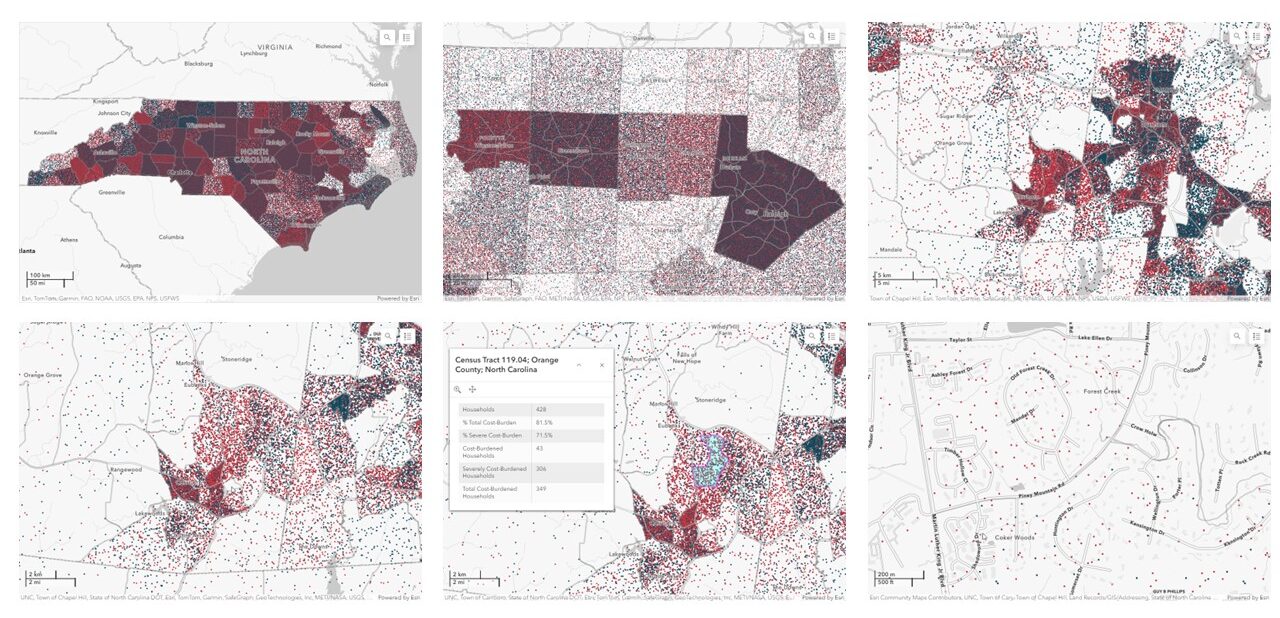
The interactive map below shows the cost-burdened and severely cost-burdened renter households across North Carolina. Each dot represents one renter household among the estimated 630,034 cost-burdened households in North Carolina, including an estimated 299,001 severely cost-burdened households. A blue dot represents a household that spends 30%-49% of income on rent plus utilities, and a red dot represents a household that spends 50% or more of income on housing.

This dot density map randomly places the dots within the specified geographies, depending on the scale. Zoomed out, the dots are distributed to the county; as you zoom in and explore the map, the dots will be assigned to Census tracts and then block groups.

Data was obtained from the American Community Survey 2018-2022 and mapped used ArcGIS Online. An R script for the data pull is available here: github.com/davinhall-uncg/cost_burden

Interactive Cost-Burden Map

Areas that are more red have a higher rate of severely cost-burdened households than those that are more blue. Watauga County – home of Appalachian State – has 42.3% of renter homes being severely cost-burdened, compared to Buncombe County with 20.5%.

Watauga County in bright red contrasted with Asheville’s Buncombe County.

There are also stark differences in the percentages of cost-burdened households within city neighborhoods. In Durham, Census tracts range from 0% to 47.9% that are severely cost-burdened. And just across the border in Carrboro of Orange County, the rates of severely cost-burdened renter households in Census tracts reach as high as 71.5%.
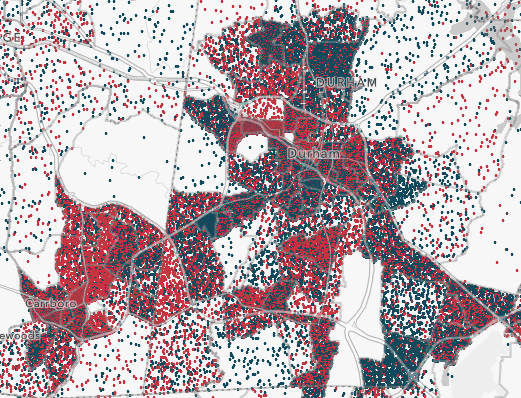
Census tracts in Durham County

The lack of affordable housing affects every county in North Carolina. Explore the map further to identify areas of disparity across the state. Clicking anywhere on the map will reveal cost burden statistics for the county, tract, or block group that you selected.

Sources:

United States Census Bureau. “B25070: Gross Rent as a Percentage of Household Income in the Past 12 Months.” 2018 – 2022 American Community Survey. U.S. Census Bureau’s American Community Survey Office, 2022. Web. 12 February 2024 <http://ftp2.census.gov/>.


Posted on June 17, 2024

Featured Image for CHCS New Faculty Fellow

The Center for Housing and Community Studies of the University of North Carolina Greensboro is pleased to announce the appointment of Dr. Erica Payton as Faculty Fellow. Dr. Payton, an Associate Professor in UNCG’s Department of Public Health Education, previously held the rotating CHCS faculty fellowship during the calendar year 2020. She returns now as a permanent fellow, to work collaboratively with the CHCS director and staff, leading members of the CHCS team on applied projects, mentoring students, and helping to develop community-based solutions to pressing issues in the areas of housing, health, and community safety.

Dr. Payton will begin her fellowship as co-Principal Investigator on a major project, funded by the Robert Wood Johnson Foundation, to study the racially disparate effects on housing conditions of state preemption policies barring proactive local housing code enforcement programs.

Dr. Payton specializes in public health education, with a research agenda focused on health disparities and equity, particularly in the realms of firearm, intimate partner, and community/neighborhood violence. She employs a comprehensive research approach, utilizing both quantitative and qualitative methods including survey research, semi-structured interviews, content analysis, and focus groups. Her research integrates a social ecological perspective, examining violence prevention across individual, community, societal, and policy levels, and is informed by health equity frameworks. She received policy analysis training as a 2022 RAND Faculty Leaders Fellow in Policy Research and Analysis, incorporating policy strategies into her teaching and research.

We warmly welcome Dr. Payton back to the Center.

Posted on December 20, 2018

Featured Image for Managing health conditions begins at home

On the Dec 7 2018 edition of PBS News Hour, John Yang interviews Dr. Stephen Sills of the Center for Housing and Community Studies regarding the link between poor housing and asthma:

“Greensboro’s efforts are part of a growing interdisciplinary approach, attacking the causes of conditions like asthma to try to improve health and reduce medical costs.

Stephen Sills is a University of North Carolina-Greensboro sociologist. He looks for patterns in asthma cases using data from the Cone Health system, the city’s major hospital operator and a partner in the project.

Then he uses Google Maps Street View to plot substandard housing.”

Watch the entire segment here:

Posted on November 21, 2018

Featured Image for The Many Faces of Gentrification

Dr. Sills and other experts addressed community members about the issue of gentrification during the Triad Gentrification Symposium on November 14, 2018. The event was hosted by the Winston-Salem Human Relations Commission/New Horizons Fair Housing Committee.

Posted on November 20, 2018

Featured Image for Condemning Asthma, Not Homes

In the Nov 13 2018 edition of Shelterforce, Brett Byerly discusses the ways Greensboro Housing Coalition has used findings from the Center for Housing and Community Studies:

“Cone Health provided data about asthma hospitalizations and emergency department visits to CHCS, which was able to analyze which census blocks and neighborhoods the patients were coming from. CHCS researchers found that the level of asthma hospitalizations and ER visits coming from the Cottage Grove community was significantly higher than what would be expected based on the size of the population living there. In fact, it was roughly 120 times higher. The majority of ER and hospital visits coded with a respiratory diagnosis from Cottage Grove came from the Avalon Trace apartments. “

Read the full story here.

Posted on July 20, 2018

Featured Image for Re-entry Housing Issues

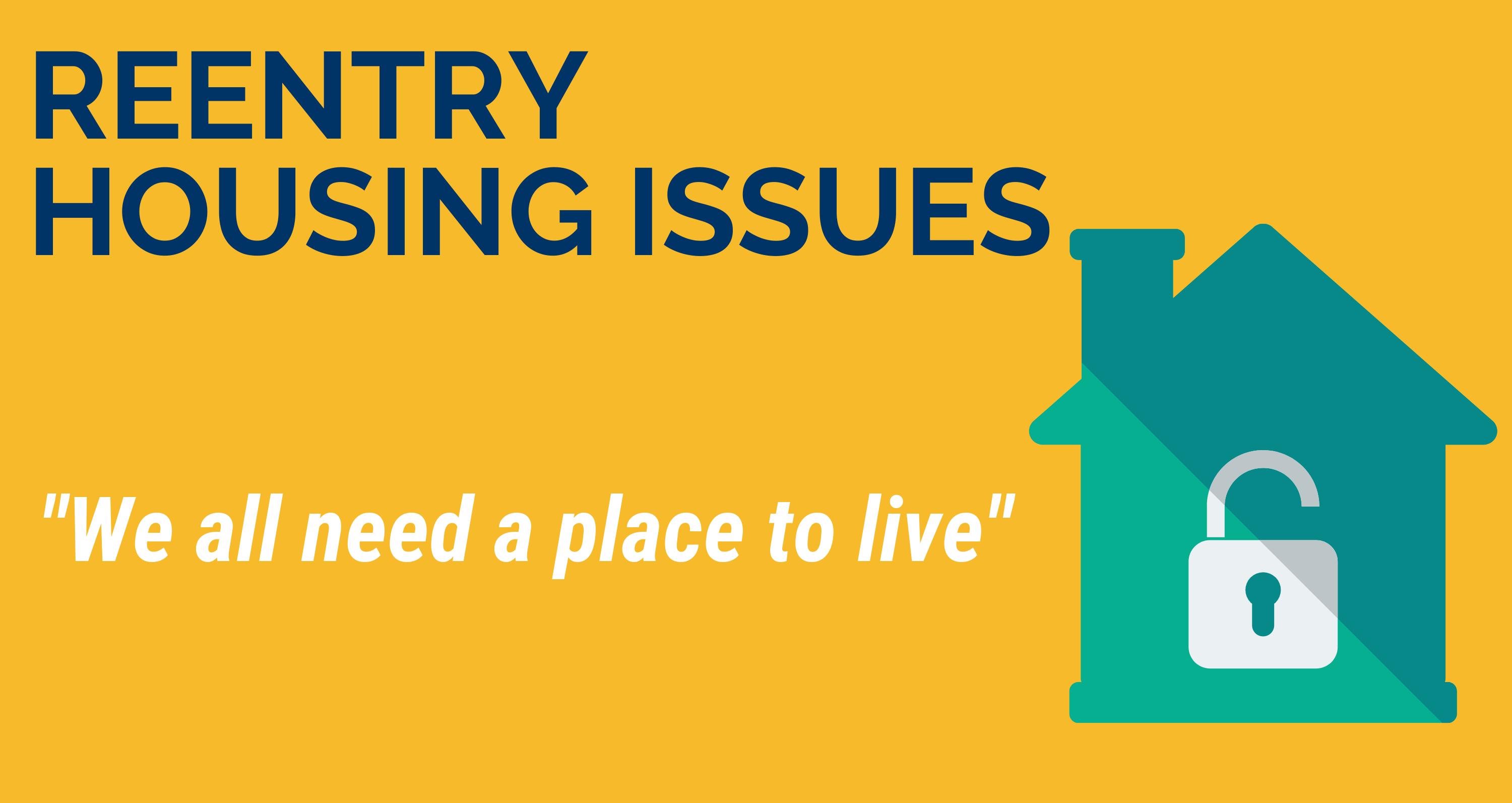
This brief infographic illustrates current data on reentry housing, a major issue for individuals rejoining the community after a period of incarceration.

Posted on July 01, 2018

Featured Image for GIS Specialist Needed

The Center for Housing and Community Studies is looking to hire a Geographic Information Systems Specialist to assist in mapping the intersection between health and community outcomes and housing quality.

Posted on May 29, 2018

Featured Image for Governing Magazine: Where Evictions Are Most Common

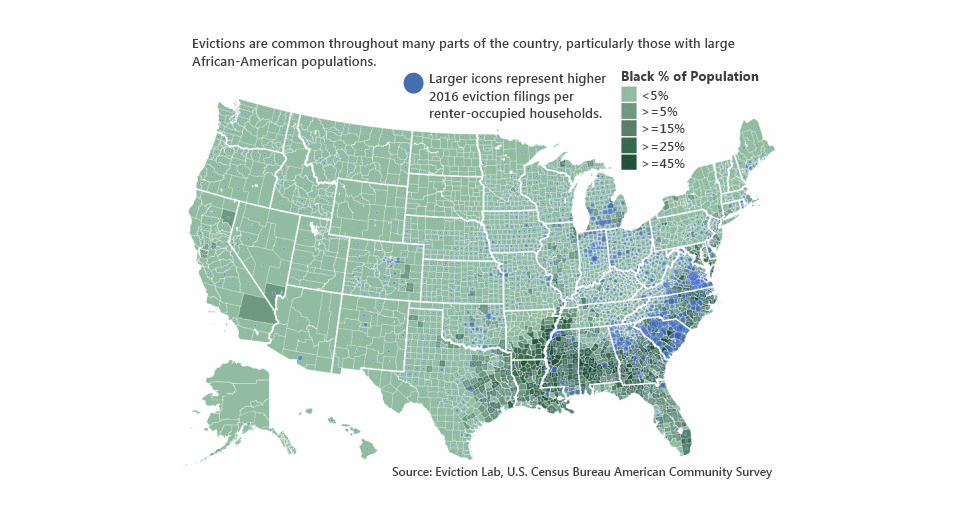
In the June 2018 edition of Governing Magazine, Mike Maciag interviewed Dr. Stephen Sills as to why the highest eviction rates were found throughout the Southeast:

“For many renters living in southeast Greensboro, N.C., changing addresses is an all-too-familiar endeavor. The mostly low-income residents in these communities of concentrated poverty often can’t afford to pay the monthly rent and are ultimately evicted. “We have economic and racial segregation, a concentration of social issues with bad outcomes, and families that are stretched to the limit who routinely are finding themselves in eviction court,” says Stephen Sills, who directs the Center for Housing and Community Studies at the University of North Carolina at Greensboro.”

Read the full story here.

Posted on May 23, 2018

Featured Image for Housing and health symposium at UNC Greensboro

Symposium offers new tools for community revitalization

The UNC Greensboro Center for Housing and Community Studies, in conjunction with the Richmond Memorial Health Foundation, will host a symposium on June 1 on the use of data to revitalize housing and health in mid-sized cities. U.S. Secretary of Housing and Urban Development Dr. Ben Carson is slated to attend the event on the UNCG campus as part of the kick off for National Healthy Homes Month.

The Innovations in Planning for Better Community Housing and Health Symposium  is open to city planners, community officials, nonprofits, researchers, students, advocates and other professionals whose work relates to health and housing.

The event is funded by the Community Foundation of Greater Greensboro and Invest Health, a Robert Wood Johnson Foundation and Reinvestment Fund initiative to aid U.S. neighborhoods facing the greatest barriers to good health. Symposium organizers include leaders from the UNCG Center for Housing and Community Studies, the Greensboro Housing Coalition, the City of Greensboro, Cone Health, East Market Street Development Corporation, and more.

A registration fee of $15 will cover meals and parking. For more information go to: https://chcs.uncg.edu/research/projects/innovations-in-planning-for-better-community-housing-and-health.

Posted on May 20, 2018

Featured Image for WUNC: Greensboro Eviction Rates Are Among The Highest In The Country

On May 10, 2018, Frank Stacio and Dana Terry interviewed Dr. Stephen Sills about Greensboro’s eviction rates, for WUNC’s The State of Things: 

“Stephen Sills is the director of The Center for Housing and Community Studies at the University of North Carolina Greensboro. He says there is plenty of housing in Greensboro, but the problem is it is not affordable. The hunt for affordable housing has created a market where there is no incentive for landlords to work with tenants. If someone is evicted, there is a steady stream of people behind him.

“Sills joins host Frank Stasio to talk about the affordable housing crisis in Greensboro and how it may be spreading to cities like Rocky Mount. Sills has spoken to landlords and those who have been evicted, and he is working with the court system, researchers and advocates to create solutions.”

Read or listen to the full story here.